Evaluating Agellia Benitta for Your Next Design Project
Choosing the right typeface can make or break a visual identity. Among the many options available to designers today, Agellia Benitta has gained attention as a handwritten font that balances style with legibility. Before committing to any font purchase or download, it helps to understand exactly what you are getting, where it performs well, and where you might want to consider alternatives. This evaluation walks through the characteristics, practical applications, and tradeoffs associated with Agellia Benitta so you can determine whether it aligns with your specific design goals.
What Is Agellia Benitta?
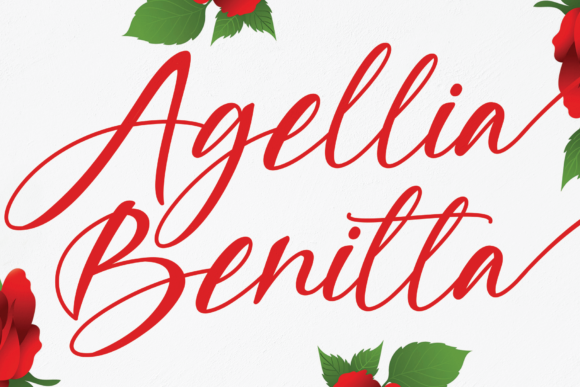
Agellia Benitta is a handwritten script typeface characterized by clean strokes and a smooth, flowing appearance. Unlike some handwritten fonts that lean heavily into rough textures or exaggerated swashes, this one maintains a delicate and polished finish. The letterforms feel approachable without being overly casual, and the spacing tends to be consistent enough to work in multiple contexts. Designers often describe it as having a refined, airy quality that suits projects where handwriting is meant to convey warmth without sacrificing readability.
It belongs to a broader category of script fonts designed to mimic natural handwriting while offering the reproducibility and uniformity that digital design demands. What sets Agellia Benitta apart from many competitors is its restraint. The strokes are thin but not fragile, the connections between letters feel organic, and the overall rhythm avoids the stiffness that sometimes plagues handwritten fonts. This makes it a versatile choice for creatives who want the human touch of a script without the messiness that can come with more rustic alternatives.
Why Designers Consider This Font
People researching Agellia Benitta typically fall into a few categories. Some are looking for a signature-like font for branding and logo work. Others need a reliable script for packaging, labels, or merchandise such as t-shirts and tote bags. Many work in print and stationery, designing invitations, greeting cards, or inspirational quote graphics for social media. Across these use cases, the common thread is a desire for a font that feels personal but remains professional.
The font appeals to those who want to inject subtle elegance into a project without the typeface becoming the dominant visual element. Since it avoids heavy ornamentation, it can coexist with other design features such as photography, illustration, or minimalist layouts. This adaptability is part of its draw, especially for freelance designers and small studio teams who need a dependable script they can use across multiple client projects without it feeling repetitive.
Benefits and Strengths
One of the primary advantages of Agellia Benitta is its legibility at various sizes. Many handwritten fonts break down when scaled down for business cards or small product tags, but this one retains clarity because of its consistent stroke width and uncluttered letter shapes. Even at smaller point sizes, individual characters remain distinguishable, which matters for practical applications like ingredient lists on packaging or secondary text on invitations.
Another benefit lies in its neutrality. The font does not impose a strong thematic identity, meaning it can adapt to different brand personalities. Whether you are designing for a boutique bakery, a wedding planner, a skincare line, or a lifestyle blog, Agellia Benitta can feel at home. This flexibility saves time and reduces the need to license multiple script fonts for slightly different aesthetics.
Designers also note that the font pairs well with a range of complementary typefaces. A clean sans-serif like Montserrat or Open Sans provides a crisp contrast, while a delicate serif can amplify the refined feel. This pairing potential expands the font's usefulness across editorial layouts, website headers, and cohesive brand systems.
Situations Where Agellia Benitta Is a Strong Fit
Certain design contexts naturally highlight the strengths of this typeface. If you are working on wedding invitations or event stationery, the font's delicate lines and graceful flow align with the tone many couples seek. It handles names, dates, and short poetic phrases exceptionally well. Similarly, for product packaging in beauty, wellness, or artisanal food categories, the font conveys care and craftsmanship without feeling overly rustic or distressed.
In branding projects, particularly for service-based businesses like photographers, florists, or coaches, Agellia Benitta can serve as a distinctive wordmark or tagline font. Its handwritten nature suggests a personal touch that corporate sans-serifs cannot replicate. For social media graphics and digital content, the font's clean rendering on screens makes it suitable for quote posts, story templates, and pinned highlights where short, impactful text needs to feel warm and inviting.
Apparel and merchandise design also benefit from this font's clarity. When printed on t-shirts, tote bags, or mugs through screen printing or direct-to-garment methods, the thin strokes need to hold up. Because Agellia Benitta avoids extreme thin-to-thick transitions common in some calligraphic scripts, it tends to reproduce more reliably across different production techniques.
Tradeoffs and Limitations to Consider
No typeface suits every purpose, and Agellia Benitta has characteristics that may not work for all projects. Its delicate stroke weight, while elegant, can become a liability in high-contrast or low-resolution environments. When used on dark backgrounds with light text, the thin lines may lose definition, especially on screens with lower pixel density or in print on absorbent, uncoated papers where ink spread can blur fine details.
The font also prioritizes subtlety over impact. If your project demands a bold, attention-grabbing headline or needs to compete visually in a crowded retail shelf, a more robust script or a display serif might serve you better. Agellia Benitta excels at quiet refinement, but it does not command space the way heavier typefaces do.
Another consideration involves the character set and language support. Like many boutique handwritten fonts, it may have limited glyph coverage for extended Latin, Cyrillic, or other scripts. If your project requires multilingual typesetting, you will want to verify that the font includes all necessary characters before committing to it. Additionally, some designers may find the font lacks the alternate characters, ligatures, or swash variants that more elaborate script fonts provide, which can limit customization for high-end branding work.
Comparing Agellia Benitta to Alternatives
Understanding where Agellia Benitta sits relative to other options helps clarify whether it is the right choice. On one end of the spectrum, you have highly textured, brush-style scripts that emphasize raw energy and imperfection. These fonts, such as those mimicking actual brush pens or markers, work well for edgier brands or creative projects that want visible grit. Agellia Benitta does not compete in that space. Its appeal lies in its smoothness, not in texture or roughness.
On the other end, you find formal calligraphy fonts with dramatic contrast between thick and thin strokes. These carry a more traditional, often luxurious feel suited to high-end weddings, formal event branding, or classic book covers. Agellia Benitta feels more contemporary and understated by comparison, making it a better fit for modern minimalist aesthetics than for projects rooted in ornate tradition.
If you need a font with extensive OpenType features, stylistic alternates, and multiple weights, you may want to explore families built around a central script. Some premium fonts offer complete design ecosystems with matching sans and serif companions. Agellia Benitta is a standalone solution, which simplifies decision-making but may not satisfy advanced typographic needs.
Practical Decision-Making Insights
Before finalizing your font selection, consider a few practical questions. First, think about the primary medium for your design. If most of your output is digital and destined for high-resolution screens, the thin strokes of Agellia Benitta will render cleanly. If print is your main channel, test the font on the specific paper stock and printing method you plan to use. A quick test print at actual size can reveal issues that screen previews hide.
Second, evaluate how much text you need to set. This font shines for short headlines, names, quotes, and accent text. For long-form body copy, a handwritten font—even a clean one—can fatigue readers. Reserve Agellia Benitta for the moments where you want to draw the eye and create a personal connection, and use a more neutral typeface for extended reading.
Third, think about brand longevity and versatility. If you are building a visual identity that needs to last years and span touchpoints from digital ads to physical storefronts, ask whether a delicate handwritten font will remain appropriate as the brand evolves. Some brands outgrow script-heavy identities, while others successfully anchor their entire look in a signature handwritten style. Your answer depends on the brand personality and the audience you aim to reach.
When Alternatives May Be Worth Considering
There are scenarios where passing on Agellia Benitta in favor of something else makes practical sense. If your project involves large-scale signage or vehicle wraps viewed from a distance, the font's thin strokes may lack the necessary visibility. Bold sans-serifs or slab serifs typically perform better in those environments. Similarly, if your design must meet accessibility standards, particularly for users with visual impairments, the low contrast and fine lines could pose legibility challenges that a more robust typeface would avoid.
Projects requiring extensive customization at the character level may also benefit from fonts with built-in alternate glyphs and ligatures. While you can manually adjust vector outlines in software like Adobe Illustrator, doing so for every instance across a large project becomes time-consuming. A font with built-in variety streamlines that process and can produce more dynamic, natural-looking results with less effort.
Finally, if your budget or licensing constraints push you toward open-source solutions, you may need to explore freely available handwritten fonts. Many quality options exist, though they may not match the specific aesthetic balance that Agellia Benitta offers. Weigh the licensing terms carefully, especially for commercial work, to ensure compliance with font usage rights.
How to Evaluate Whether Agellia Benitta Aligns With Your Goals
Ultimately, selecting a typeface involves matching the font's inherent qualities with the emotional and functional needs of your project. Agellia Benitta delivers on its promise of being stylish and delicate, with a clean and smooth vibe that suits a wide range of contemporary design work. Its strengths cluster around personal, heartfelt communication—invitations, branding for independent businesses, thoughtful product packaging, and any context where a human touch matters more than commanding presence.
Your decision should rest on a clear-eyed assessment of what your project demands. If you need a font that whispers rather than shouts, that conveys warmth without sacrificing polish, and that integrates into existing design systems without requiring extensive typographic gymnastics, Agellia Benitta deserves serious consideration. If your needs lean toward high-impact visibility, deep customization, or broad multilingual support, researching additional script fonts alongside this one will help you make a confident, informed choice.
Testing the font in your actual design environment—applied to a real layout with your brand colors, imagery, and scale—remains the most reliable way to gauge compatibility. A font that looks appealing in isolation can behave unexpectedly when placed in context. Take the time to experiment, compare, and verify. That measured approach will lead you to the right typeface for your unique creative vision, whether that turns out to be Agellia Benitta or another thoughtfully chosen alternative.